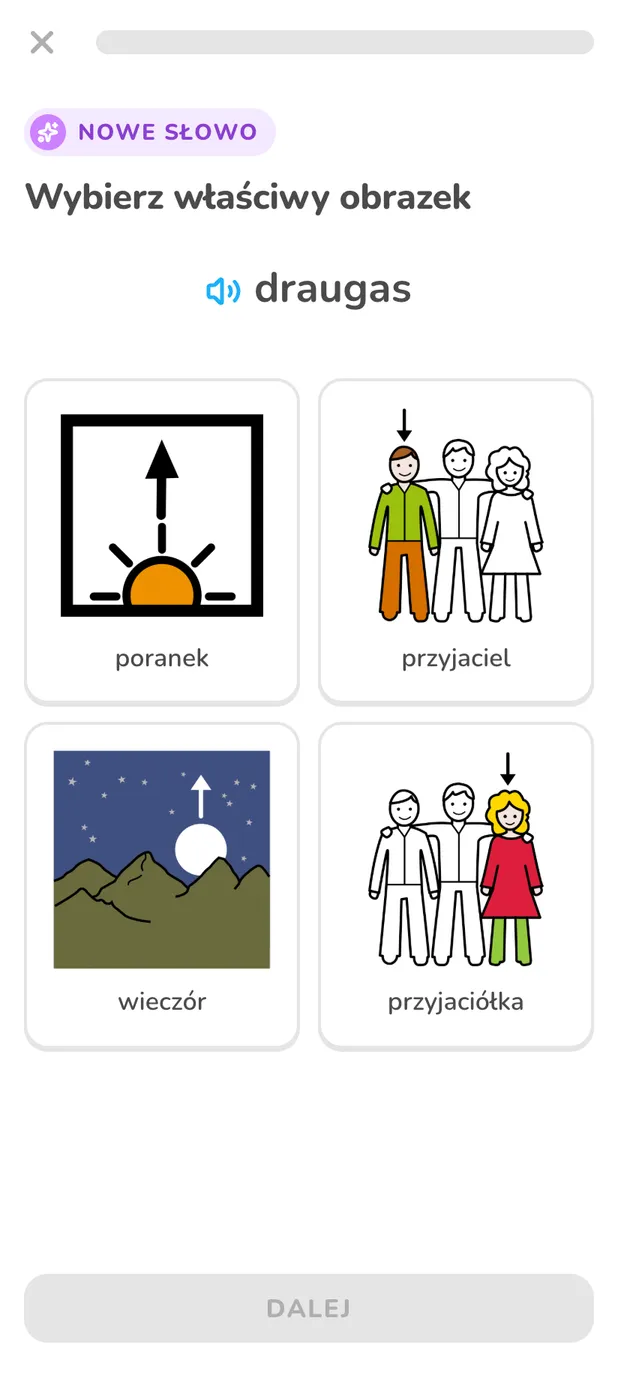
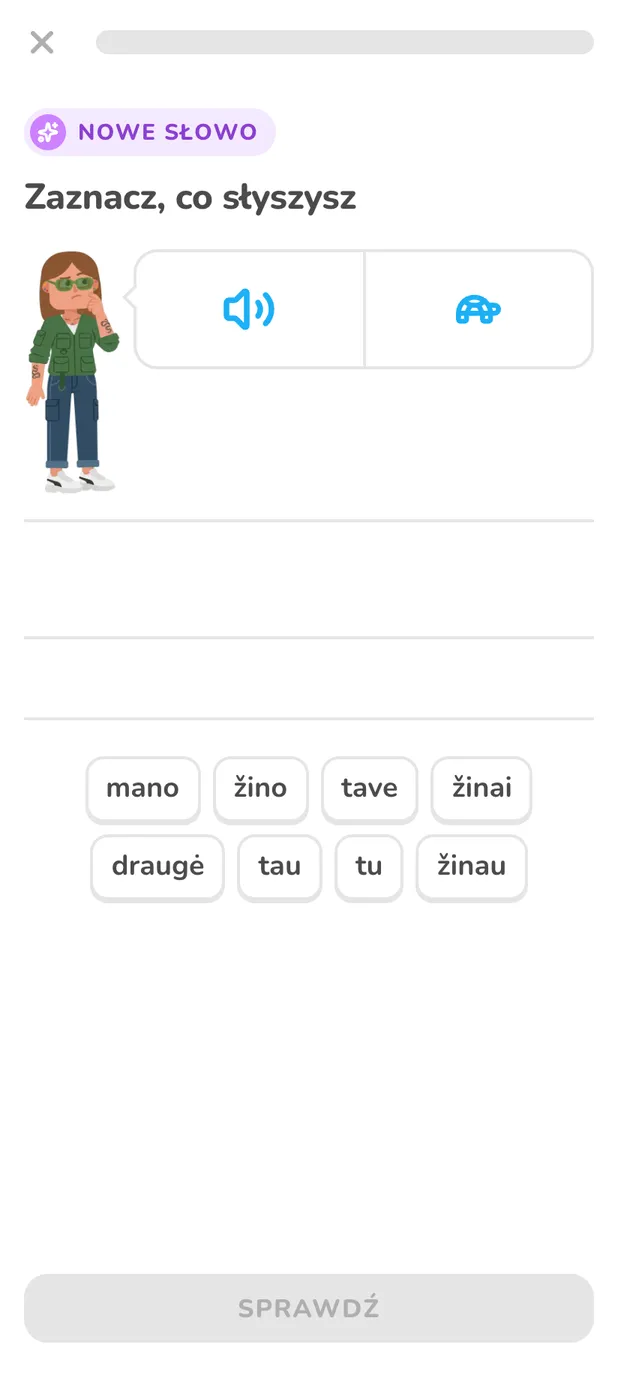
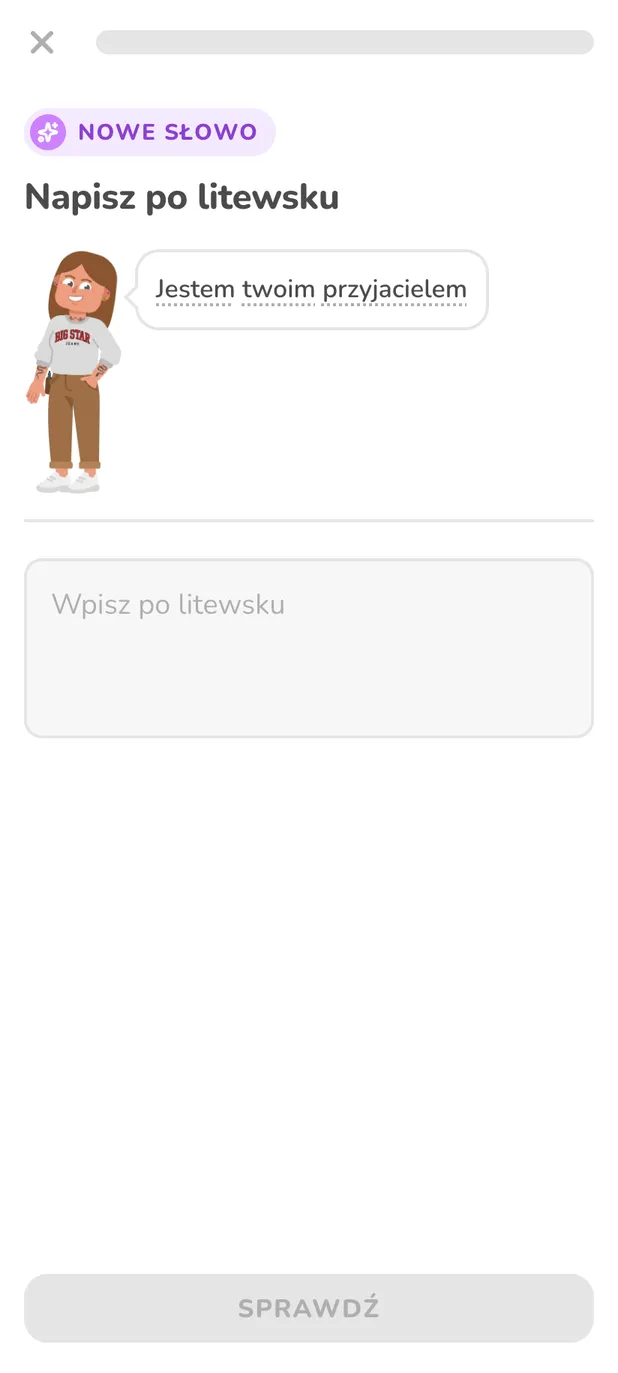
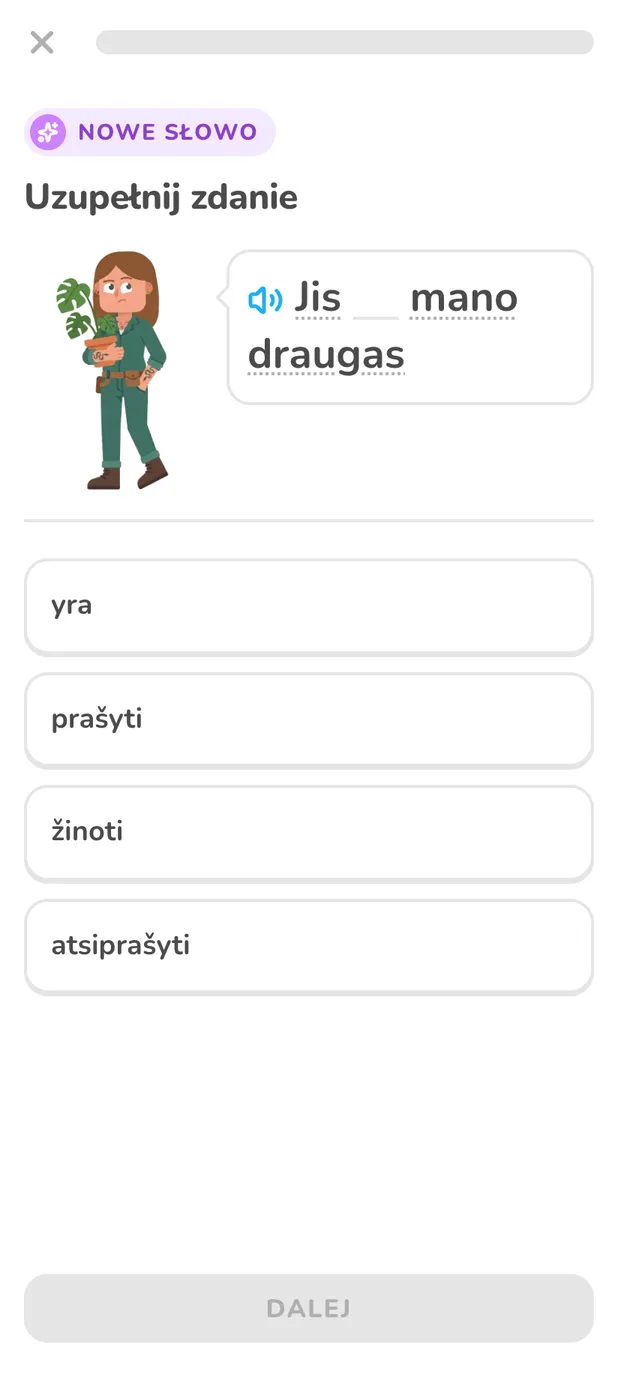
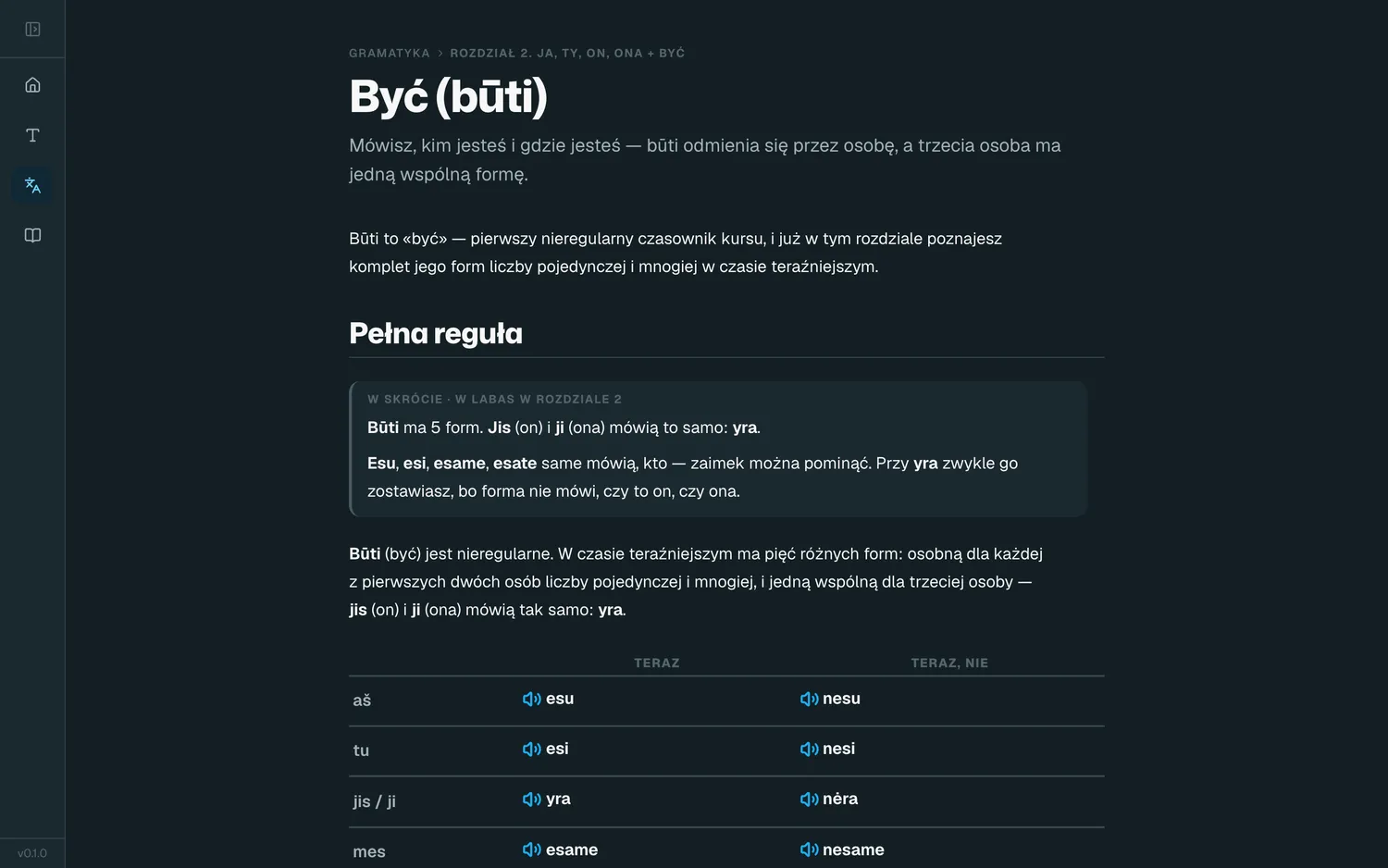
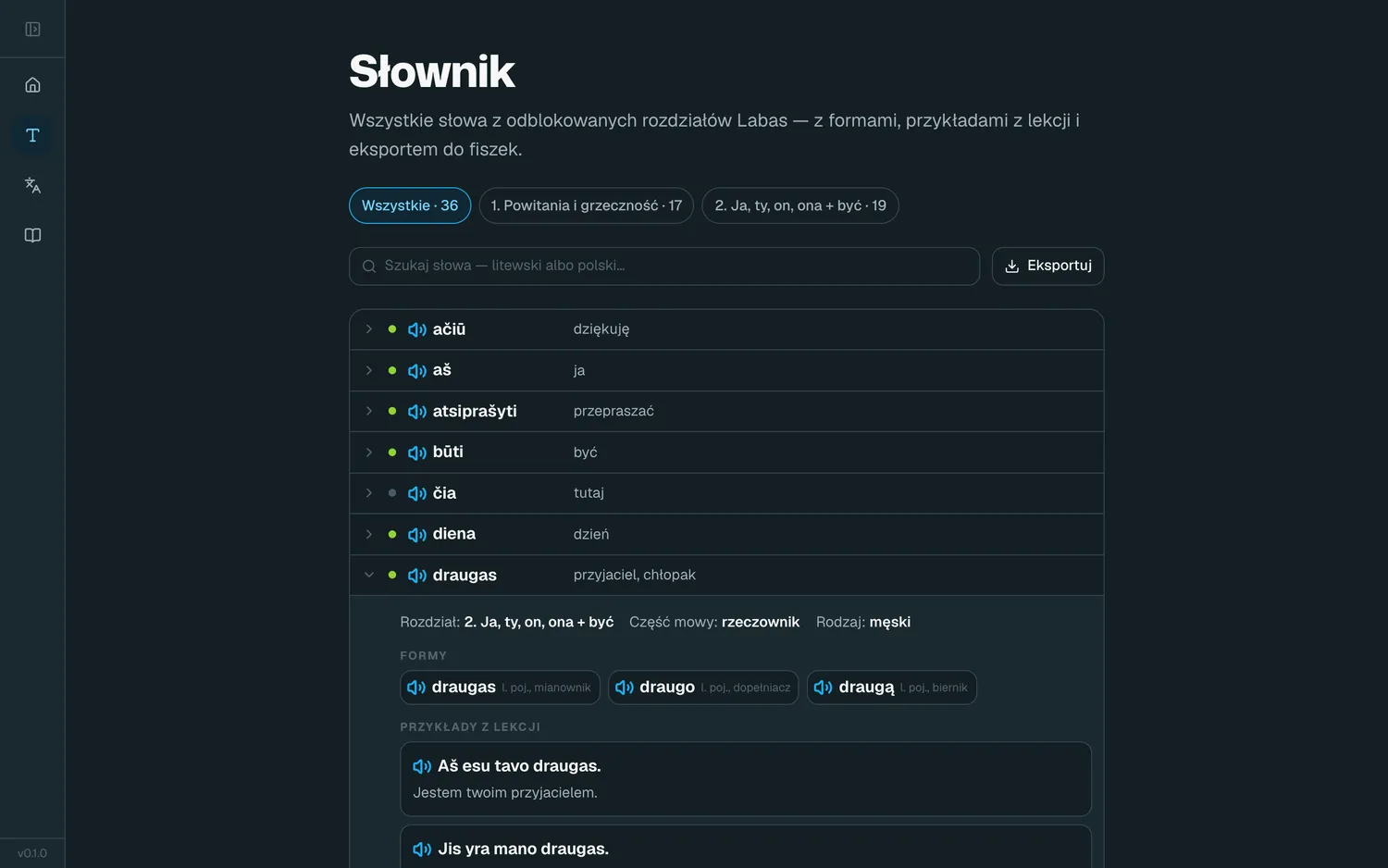
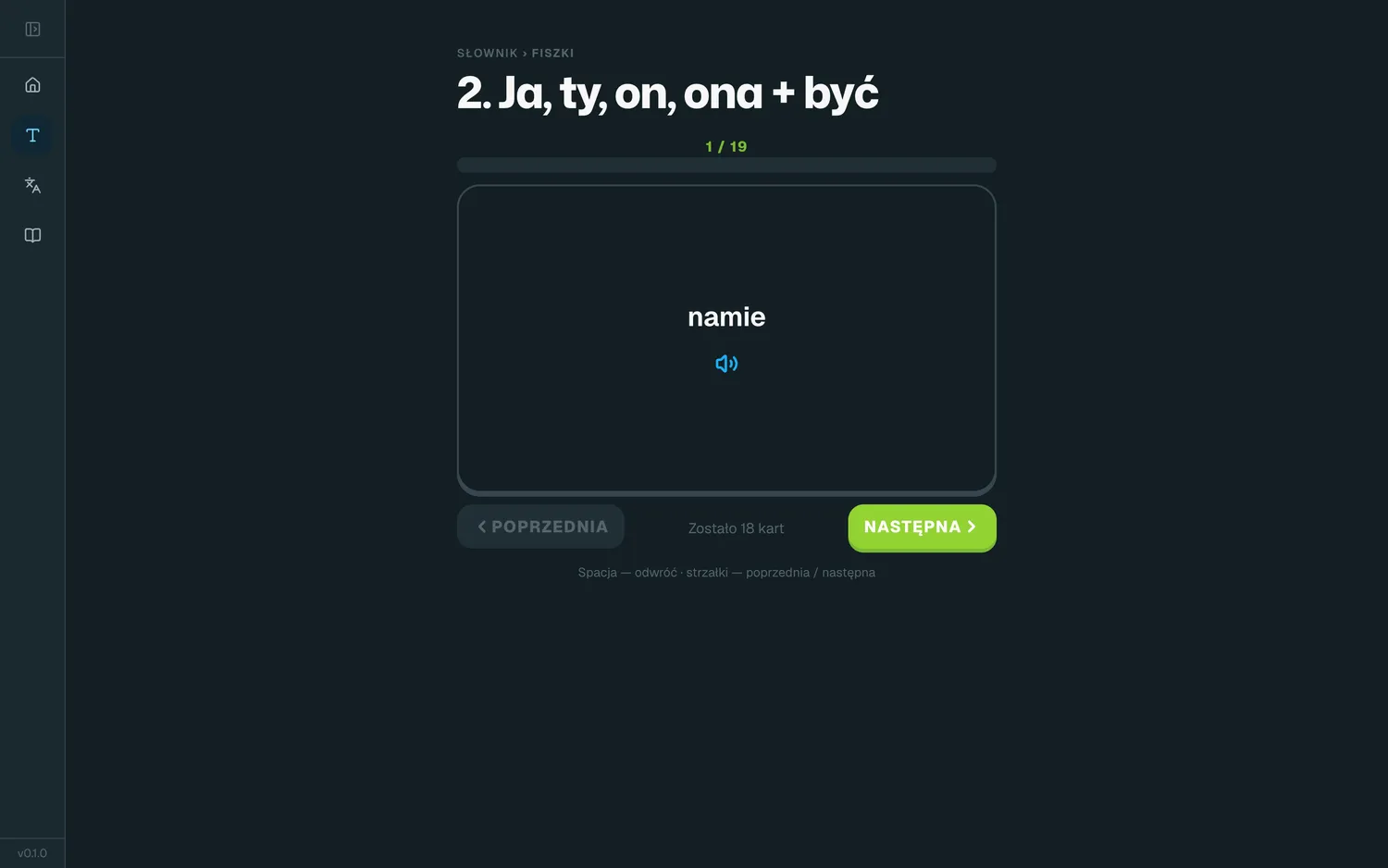
Then I read how this is actually supposed to work, and rebuilt it.
A research pass on how Duolingo's teaching engine is put together, and on what language research says about pace and difficulty. The whole structure of the course changed after it.
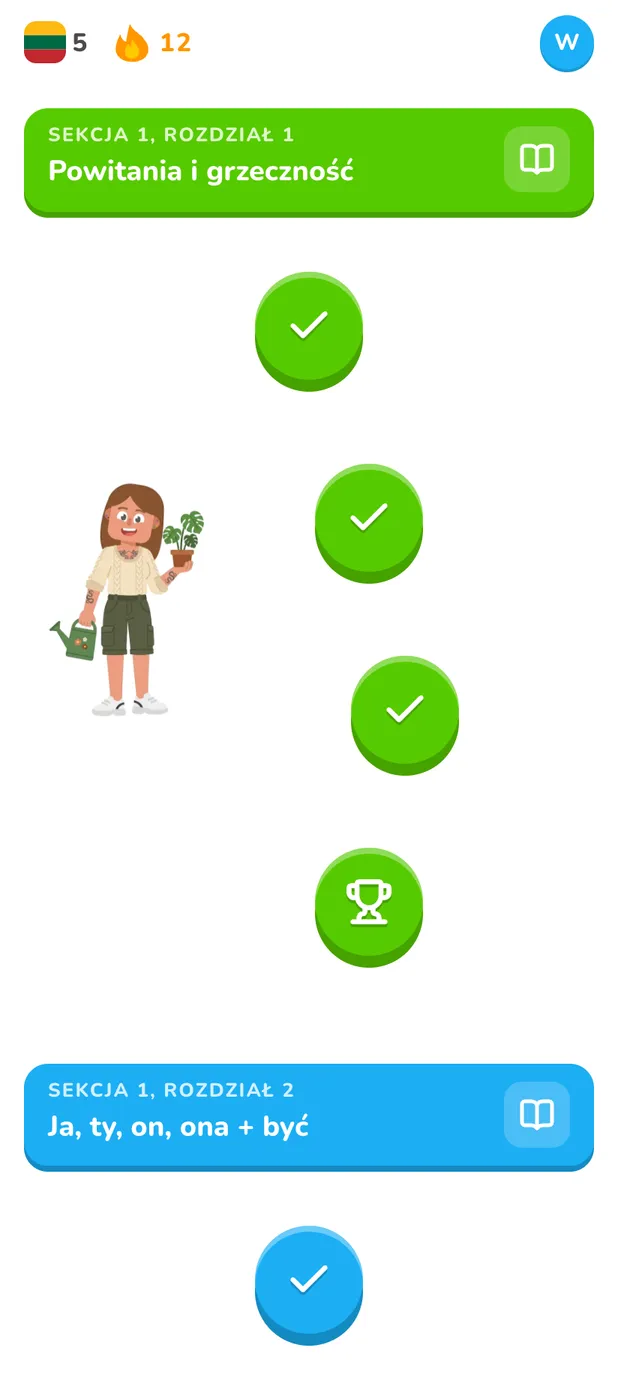
The shape of the course
Sectionthe whole course, 20 chapters
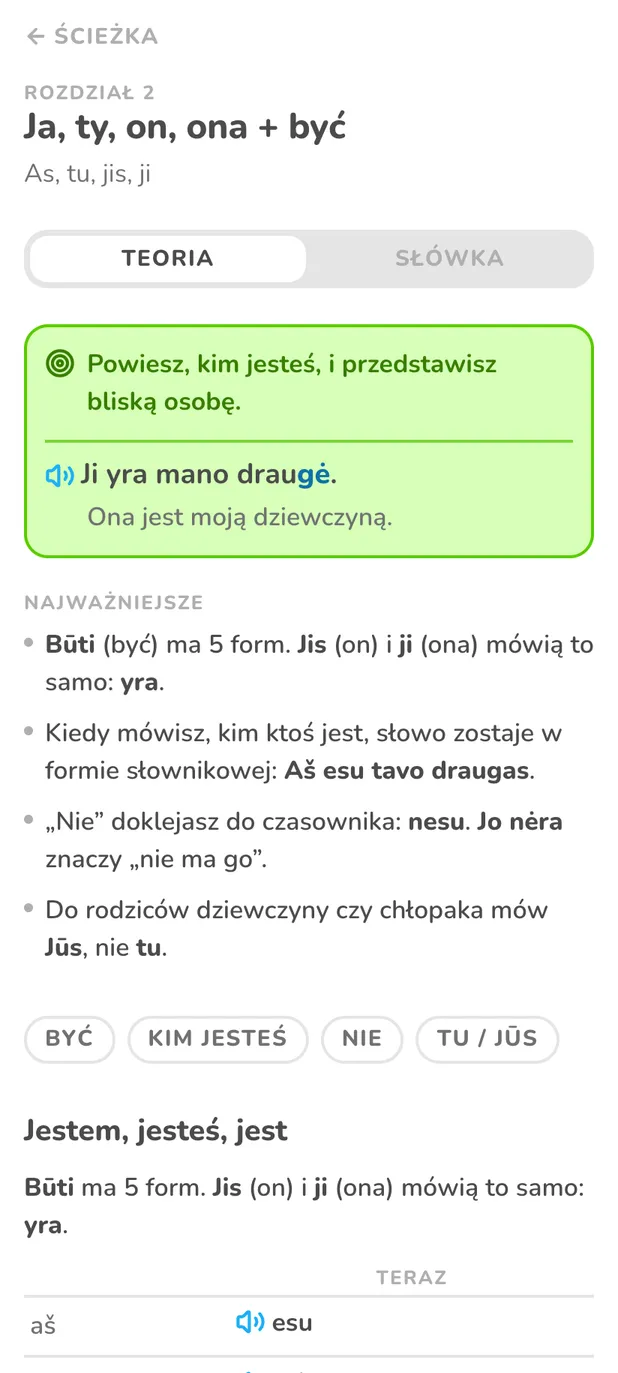
Chaptera topic — greetings, questions, food
Levelone circle on the path · 4 lessons
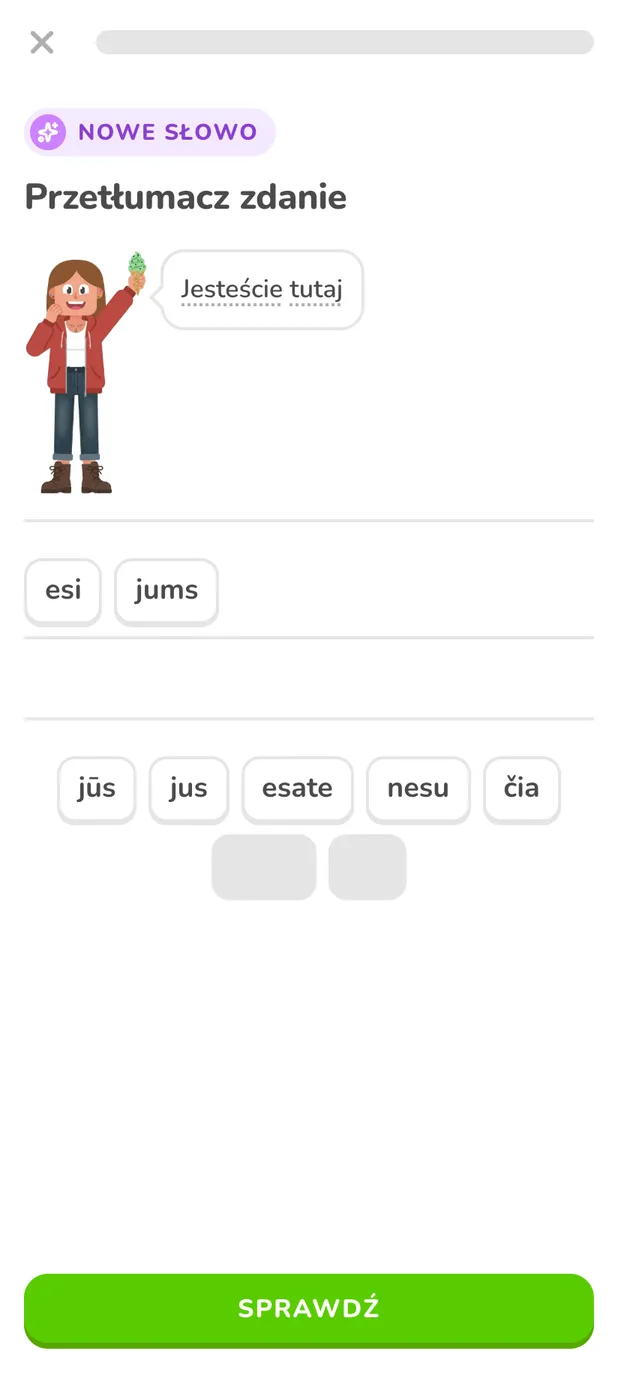
Lesson12 exercises · 2 new words · about 10 minutes
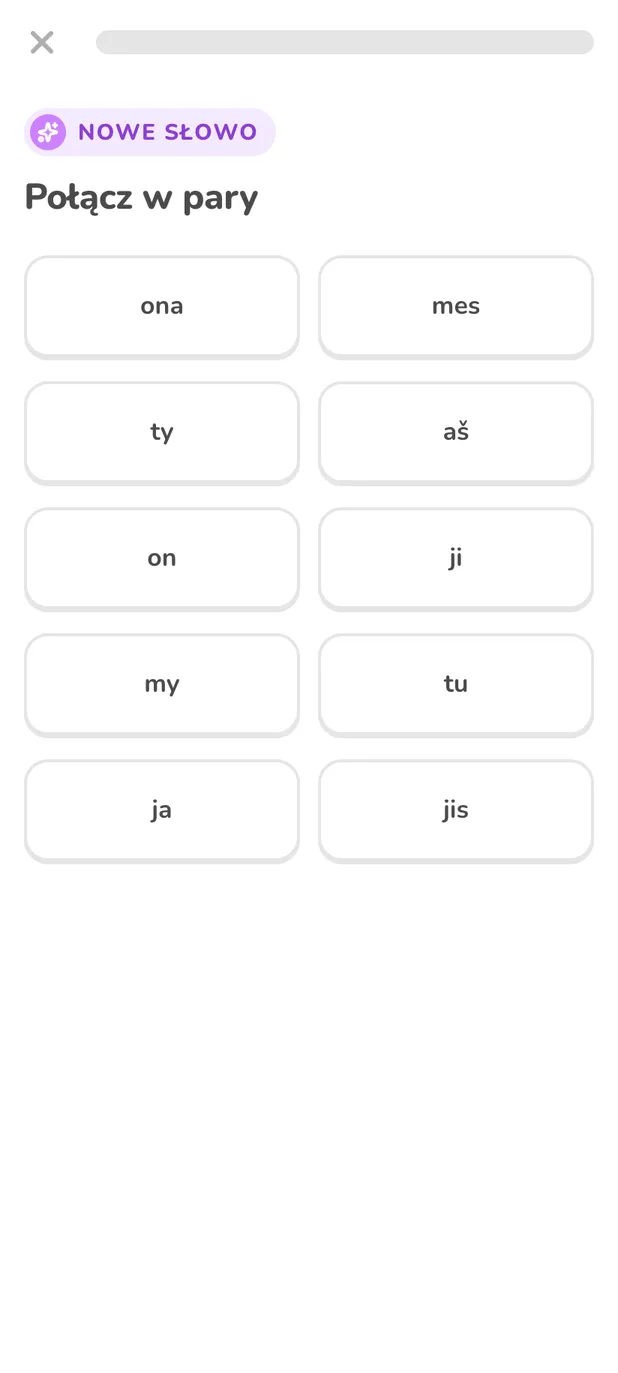
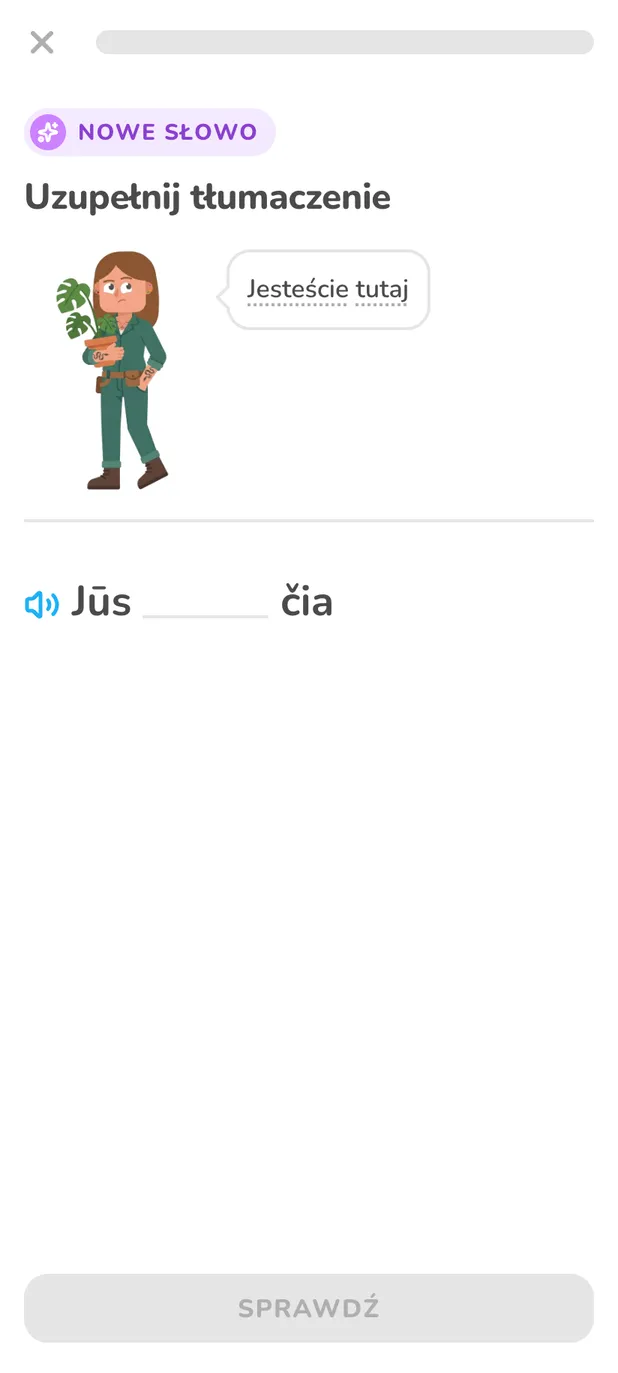
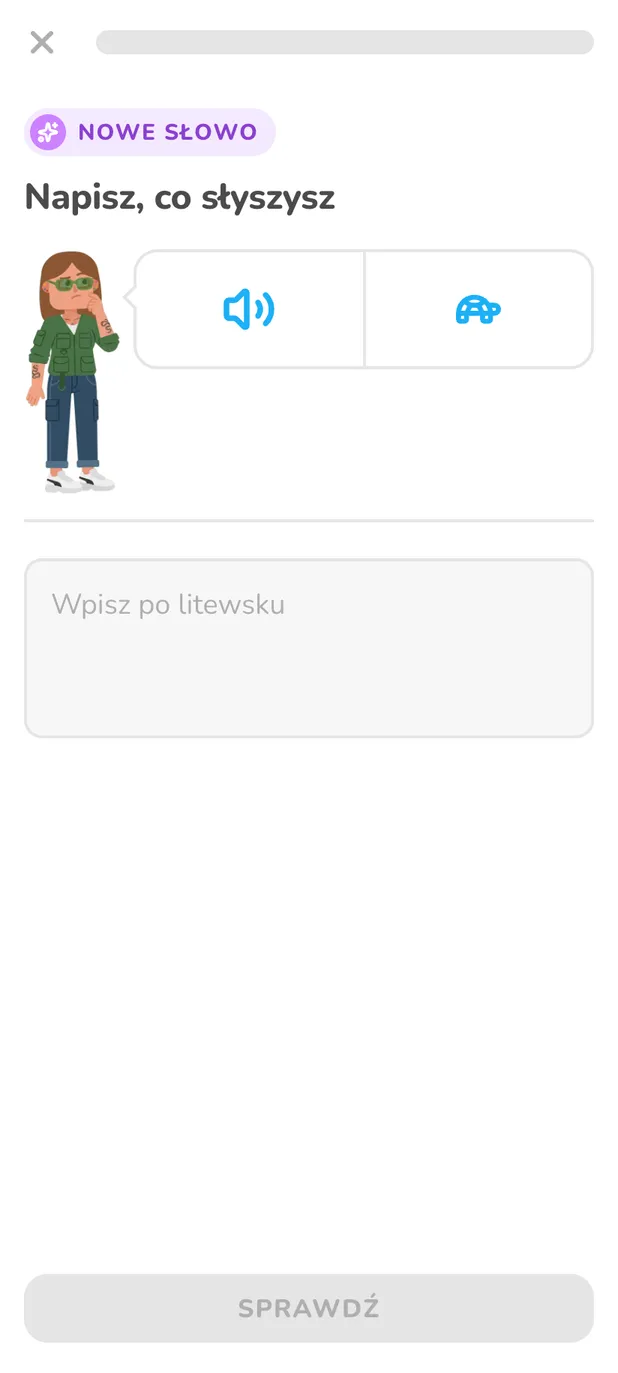
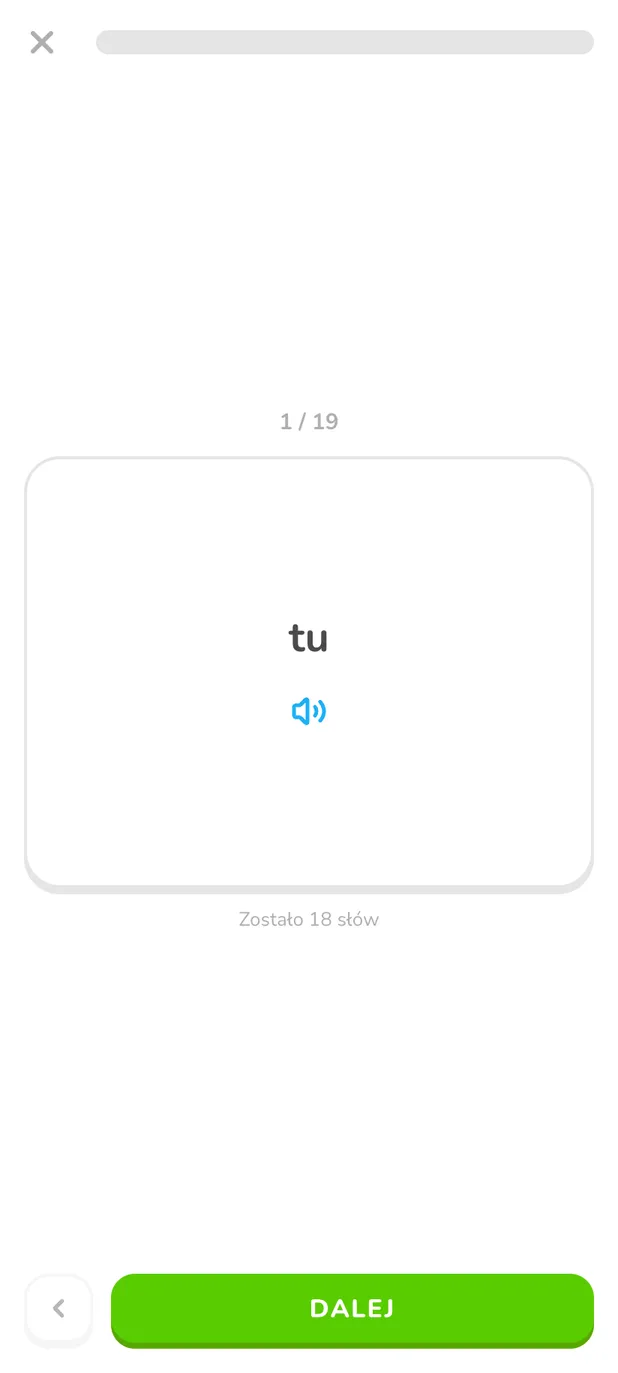
Exercisebuilt on the spot from the word list
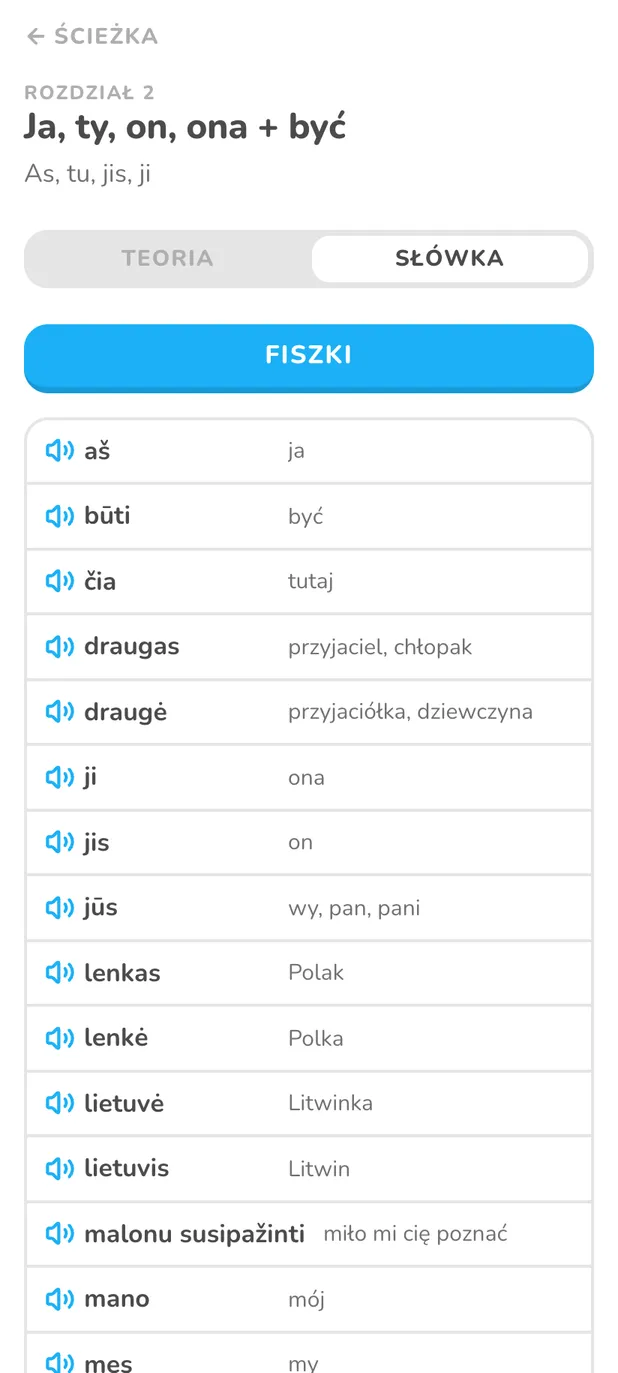
Levels and lessons aren't written anywhere — the app works out how many are needed from the number of words in a chapter. Chapters 1–5 come out as 23 levels and 92 lessons. Twenty chapters will be roughly 80 levels and 330 lessons.
Layer 1 · when
Spaced repetition
Decides which words come back today. Reviews are weighted towards the ones closest to slipping, not just the overdue ones.
Layer 2 · how hard
A ladder, 0 to 4
Recognising a word is easier than producing it. A word climbs the ladder before the app is allowed to ask the hard way.
seen
recognise
pick it out
recall it
write it
Layer 3 · which type
Aim for 80%
The app keeps a rating for me and one for each exercise type, and picks the type where I should get it right about four times out of five. Hard enough to learn, easy enough to keep going.
2 new words per lesson
12 exercises
3 exposures per new word
4 lessons per level
last level of a chapter = revision only
Deliberately gentler than the research suggests. Easier, fewer new things at once, more repetition, more lessons.